Interview Archives - CAHR26
Making Super Achievers: Creating a Cycle for Positive Change

Making Super Achievers: Creating a Cycle for Positive Change

 In the midst of change in the way we work, the way we grow, and the way we connect, many of the topics at the Virtual 2021 California HR Conference focus on helping HR professionals and their teams to prepare for the road ahead. One of the foremost thought leaders in the area of inclusivity and diversity is Dr. Johné Battle, who will outline his strategy for sourcing talent and developing high-performance teams.

Research shows that average person is only working at half their capacity, yet with shifts in the economy, demanding customers, a shortage of top-tier talent, and limited resources, they’re expected to do more with less and yield even better results. As an HR professional, it’s critical to be strategic about setting your team up for success.

But how can you change your approach to nurturing talent and impacting change? In this session with Dr. Johné Battle, you’ll explore the growth mindset needed to expand the capacity of individuals, teams, and the organization to drive business results. You’ll also recognize how reactions to differences can impact the treatment of people and their ability to contribute their best work.

In the ever-important role of sourcing for talent, many organizations use assessment tools or interviews, but few look at grit. Johné will address the importance of committing to grit and what you need to do to model inclusive leadership skills and communicate key messaging about the importance of inclusion. You’ll leave understanding how the equity development process can help you impact change throughout your organization.

  1. Understand how belief in capability is based on an environment where employees can be authentically themselves, feel comfortable and get reassurance.
  2. See how the learning loop works through opportunity and the right stretch.
  3. Explore how positive positioning begins with effective support and feedback.
  4. Get a confirmation of belief by assessing employees for a learning mindset, engagement, positive disposition, performance and future opportunity.

The Power of ALL TALENT…Having the COURAGE to IMPACT CHANGE
Thursday, May 27, 2021, 9-10am

Dr. J. E. Battle is VP, Diversity & Inclusion at Dollar General and Founder and CEO of The Greatness Factory. r. Johné Battle is an author, keynote speaker, professor, executive coach, change agent, blogger, and leadership development expert who helps smart people lead more effectively and develop high performing teams. He provides diversity and inclusion counseling, change management, team- building and leadership development for CEOs, top executives, and leadership teams ranging from mid-sized businesses to Fortune 500 companies.

As a dynamic motivational speaker, Johné has taken the attention of students, athletes, educators and corporate execs of all ages, interests, and backgrounds hostage with his energetic and heartfelt messages of hope, persistence, and moving beyond your circumstances. His story of overcoming an early age reading disability to pursuing an Ivy League doctoral degree has inspired audiences across the nation. He is an advocate for transformational development, and life-changing reimbursement by leveraging the benefits and freedoms that can only come through education.

Betting On You: How HR Can Fix Work Once and For All

Betting On You: How HR Can Fix Work Once and For All

One of the biggest benefits of the Virtual 2021 California HR Conference is the talented array of presenters. And one of the most inspiring is Laurie Ruettimann, who will be leading us through a deeper understanding of our own employee experience.

There’s never been a more significant opportunity for HR professionals to tackle complex issues and fix work once and for all. But far too many human resources practitioners are leading complex change initiatives and talent attraction strategies while feeling disconnected from work, disengaged from the company’s strategic goals, and overwhelmingly burned out.

You can’t fix work for others if your own employee experience suffers. In this session with Laurie Ruettimann, you’ll deepen your understanding of the true definition of employee experience by using your personal career as a case study. You’ll also explore strategies to provide engaging, personalized experiences that enable workers in all departments to be their best at every stage of the employee lifecycle.

For years, HR has been promising to create cultures of curiosity and learning that attract and retain the best and brightest workforce. Laurie believes that human resources can deliver meaningful experiences for employees, but it has to start with itself. With a carefully designed plan that focuses on bringing innovative human-centered policies and programs to life, you’ll be on your way to rethinking the future of work and moving the HR industry forward.

  1. Identify, analyze and contract the emerging trends in leadership and HR – related to the central principles of wellbeing, continuous learning, risk management, AI, customer service (CX) and the employee experience (EX) – and assess whether these trends and technological solutions are a good fit for your organization.
  2. Define and distinguish between the most common leadership styles (authoritative, task-oriented, coach, servant, hands-off, self-leadership).
  3. Plan a personal communication methodology to become more effective at advocating for and leading the organization’s people-agenda in a face-to-face, hybrid, or remote work environment.
  4. Have a working proficiency with a risk-management tool called the premortem, which evaluates uncertainty and creates a framework for HR and leadership programs, policies, and procedures in a post-COVID environment.

Betting on You, Wednesday May 26, 2021, 12-1pm


Hire Them Back: Get Women Back to Work ASAP

Did you know that 2.5 million women in America have left the workforce since the beginning of the pandemic? Perhaps one of your friends or family members left work due to the coronavirus. Maybe it’s you.

This past February, Vice President Kamala Harris warned that the rapid departure set women back for decades. Speaking to women’s groups and activists in February, Ms. Harris said, “In one year, the pandemic has put decades of the progress we have collectively made for women workers at risk.”

She called it a national emergency, and she’s correct. But it’s not like the workplace was terrific for women before COVID-19. Research from multiple academic institutions and think tanks shows us that women in the U.S. have always worked more, earned less, and had fewer savings to show for their labor than men. So when the virus eventually landed in Seattle and New York City in March 2020 and spread throughout the country, it confirmed what most of us knew: the promise of greater gender equality and inclusion in the workforce was nothing more than PR for America’s leading corporations. For employers who want to do the right thing in the face of this great moral crisis, the answer is simple: Hire women back.

Yes, Hire Women Back

Yes, reinstate women back on the payroll immediately. Don’t make them reinterview. Simply restore their health insurance and retirement benefits and contributions. Bridge their service to make sure there’s no gap on their resume. Get them back on their teams with colleagues and leaders who care about them.

Why should leaders and HR departments rehire women who left the workforce to care for their children and other immunocompromised family members? You owe it to them. During the scary spring and summer months of 2020, men shifted into remote work roles and thrived. But productivity and output only improved because of the women behind the scenes who either juggled work and domestic responsibilities or opted out of the workforce like it’s 1962.

While it’s tough for corporate leaders to wrap their minds around hiring women back, you should do it for selfish reasons. Attracting talented workers who can hit the ground running is already expensive. According to Glassdoor, the average U.S. company spent over $4,000 to hire a new employee in 2019. As the global economy opens up, this number is predicted to increase exponentially. You can pay to rehire women now, or you can pay to reskill and upskill your recycled workforce in the future. Either way, this crisis requires action. The most cost-effective path forward is to hire these women back.

Yes, There Are Obstacles

Of course, there are obstacles to just hiring women back. The problems that drove working women out of the workforce haven’t disappeared. School schedules are chaotic, caregiving demands never end, and women are still responsible for almost all household chores. According to both the World Economic Forum and the United Nations, women spend a full working day a week more than the average man doing unpaid childcare.

How do you help working women avoid the pitfalls that forced them to leave in the first place? Hire them back quickly and lean into those wellbeing programs your HR department has been talking about for years. Your corporate culture failed to protect those talented workers who needed that elusive work-life balance promised on your company’s website. You were unable to make good on your end of the bargain in 2020. Let’s rectify that mistake in 2021. It’s not just the right thing to do for working women. It’s the right thing to do for your company’s culture and morale.

Can corporations honestly be expected to hire back workers who are distracted with household duties? Absolutely. Treat these returning women like the lowest-performing member at your organization: let it slide for a while. Standards of performance are subjective even when we pretend like performance metrics are objective. When I worked in corporate human resources at some of America’s most profitable organizations, we rarely fired people for performance. Sometimes it took an act of divine intervention to place someone on a corrective action plan. And once those plans were initiated, it’s not like the organization could move quickly to fire someone and hire a talented rockstar in his place. It often took HR up to six months to terminate someone’s employment for poor performance. If you have a terrific human resources department, stage an intervention and make sure they give working women the tools and resources she needs to be successful just like you promise to other struggling workers. Tolerate the expected dip in performance as she reacclimates to her old role. Better yet, ask your HR team to step up and create systems of work and benefits programs to enable working parents of any gender to be successful within your corporate culture.

Now, there is a legitimate process-driven question about what to do with returning women whose jobs have been backfilled, eliminated, or absorbed in other ways. If the work no longer exists as it did in 2020, can we hire them back? Hell yes. Hire them back with an apology for capitalizing on the pandemic and not creating a corporate safety net to ride out the pandemic. Expect very little pushback from colleagues and supervisors. People are notoriously overworked, and I can’t imagine a scenario where an employee or manager gets mad for being awarded an additional headcount.

Does it seem absurd to ask a woman to return to work in her old job and pick up where she left off? Maybe. Hire her back anyway and ask her to work with your human resources team on a task force to address working parents’ issues in your company. Pay her (and every other member of an employee resource group) to explore serious organizational issues while earning a salary. This specific solution allows a rehired worker to network internally and discover a new internal role where it’s possible to contribute to the company’s overall success.

Yes, This Is Your Company’s Responsibility

Some might argue that we shouldn’t expect corporations to do the government’s job. They say that hiring women back en masse is merely a bandaid, and it’s not a company’s job to address society’s lack of empathy. But corporations have been leaders on social issues for decades.

During the summer of 2019, right before the pandemic, nearly two hundred of America’s top CEOs came together to change the future of work. The Business Roundtable declared that corporations had a new mission: deliver value to customers, invest in employees, deal fairly and ethically with suppliers, and support the communities where their enterprise operates. If the purpose of a corporation has changed — and companies need to be good stewards of people, communities, and the planet — you can’t fulfill that promise if nearly 1.5 million mothers are still missing from the workforce.

Unfortunately, executive leaders like to say one thing to the public and behave another way in private. Billionaires around the world added $4 trillion to their wealth during the pandemic. According to Oxfam, billionaires have more wealth than the 4.6 billion people who make up 60 percent of the planet’s population. COVID continues to drive those numbers in favor of the ultra-wealthy. Meanwhile, only four cents in every dollar of tax revenue comes from taxes on the wealthiest among us.

If companies don’t accept responsibility for their role in creating a national employment gap, politicians will notice. It seems easier to proactively tackle this issue on your terms than being hauled before Congress. As Mark Zuckerberg can testify, hearings aren’t cool.

Yes, We Need To Hire Women Back ASAP

As a longtime human resources leader and executive coach, I believe there’s only one way to fix the employment gap and help working women: hire them back. Think it can’t be done? Accenture took the lead and is committed to hiring moms back ASAP.

If a company like Accenture can partner with local non-profits and take the plunge, what’s your excuse? Hire these women back. Do this tomorrow, without delay, and with an apology to all working women and families for your role in this national crisis. Hiring women back to work isn’t just the moral and ethical thing to do. It’s the most economically feasible way to bring seasoned workers back quickly and address the forthcoming talent shortage.

But my advice is to move quickly and hire women back before they take one look at the post-COVID job market, remember what it was like to be cast aside for the common interests of men, and decide to never come back at all.


Laurie Ruettimann’s career began in 1995 as an HR assistant for Leaf Candy Company, providing operations assistance and recruiting services for an hourly workforce in a manufacturing environment that was heavily unionized and staffed with immigrants from war-torn Bosnia. Since those glorious days, She’s worked at Monsanto, Alberto-Culver (now Unilever), Kemper Insurance (out of business), and Pfizer (not her best work). Even as her title and compensation grew, she hated her job.

Laurie became a writer, speaker, and podcaster as a result of the heartbreak and outrage she experienced throughout her corporate career. While she loves calling out boorish behavior, she is dedicated to the revolutionary and long-overdue mission of fixing work by telling stories and teaching leaders how to create workplace cultures that support, empower, and engage workers meaningfully.

Now Laurie helps executives and HR leaders prioritize the employee experience to avoid the collateral damage of a toxic work environment. You can find her all over the internet, shaking her fist and yelling at clouds.

Laurie’s new book Betting on You: How to Put Yourself First and (Finally) Take Control of Your Career is now available! Order a copy

What HR can and can’t enforce when employees return to work

What HR can and can’t enforce when employees return to work

As COVID-19 stay-at-home orders are being lifted or modified and more employees are returning to the workplace and resuming business operations, it can be challenging for HR professionals to know what standards they should enforce with employees and what they can’t as they prepare their post-pandemic plans. The lines can get blurry, so here are some key areas to help point you in the right direction and ease the process of keeping everyone safe while also staying compliant with regulations.

Before we get started, It’s important to note that any information contained in this article should not be considered legal advice, and it is important for every organization to have their own legal counsel review and interpret the regulations that their organization is subject to.

What can HR enforce

There are several areas where clear policies and guidelines have been defined for responding to the pandemic when you return to work. These are some examples of areas where you can put processes in place that align with these standards:

Official COVID-19 regulatory standards at different levels

Companies should continue to enforce current local, state, federal, and industry regulations, as well as newly introduced guidelines and regulations such as the Families First Coronavirus Response Act (FFCRA) and the Coronavirus Aid, Relief, and Economic Security Act (CARES).  It will also be important to stay current, keep up with regular updates, and follow current guidelines from organizations like the Centers for Disease Control (CDC) and Occupational Safety and Health Administration (OSHA).

Furthermore, the United States government issued guidelines to enable individual states to reopen in a phased approach, so it will be important to follow the reopening guidelines established for the states you employ people in.

Here are some options for how HR professionals can manage tracking and reporting of compliance with COVID-19 regulations:

  • Adjust your policies and procedures to reflect changes and provide employees with relevant documentation on new developments.
  • Adjust your compensation models and pay rules to reflect payroll protection regulations, stimulus packages, and loans that businesses now have access to through programs such as FFCRA and the CARES Act.
  • Adjust your OSHA reporting to reflect new OSHA workplace safety measures by using frameworks built into your HCM system.
  • Automate the tracking of compliance with these new standards so you can keep your processes up to date and provide appropriate reporting.

Social distancing and personal protective equipment (PPE) orders

As employees return to the workplace and have greater risk of contact with others, employers will need to keep them safe physically.  Each company will need to determine what protections are required for the safeguarding of their workforce.

Here are some options for how HR professionals can manage tracking and reporting of social distancing and PPE enforcement:

  • Enable mobile punch options for hourly workers so they can easily clock in and out from their own mobile device. This will reduce their interactions with others and maintain social distancing protocols.
  • Provide facial recognition technology to enhance safety measures and limit exposure to a device or time clock.
  • Add or adjust attestation processes to address health-related questions, such as “Did you wash your hands?” or “Are you wearing your PPE?” This will allow you to automatically track whether employees are following proper safety standards to protect themselves and lower your risk of liability.
  • Adjust OSHA tracking and reporting to reflect new OSHA workplace safety measures by using frameworks built into your HCM system.
  • Track and report qualifiers for disaster relief when you apply through organizations such as FEMA or a state equivalent. If you take advantage of grants to cover reimbursable emergency costs, track how you spend that money by logging assets like PPE in your HCM system to reduce the risk of misspent funds.
  • Automate the tracking of compliance with these new standards so you can keep your processes up to date.

Temperature and health checks

Many states, localities, industries, and public health officials have orders in place that require employers to get temperature screenings and/or monitor symptom screenings before their employees can report to work.

Here are some options for how HR professionals can manage monitoring and reporting of temperature and health checks:

  • Adjust your incident definitions to track disease-related events and employees who have had exposure or symptoms.
  • Protect your employees’ rights and reduce the risk of violating other regulations as you try to meet new requirements, for example by ensuring you don’t expose health information protected by HIPAA.
  • Consider remote work options for employees who are reporting symptoms or are quarantined but still willing and able to work.

Sanitizing, cleaning, and disinfecting

As companies reopen, they are required to practice a sanitary environment by cleaning and disinfecting public spaces, workplaces, businesses and schools.  Companies need to follow CDC guidelines to ensure their business, employees, and customers are as safe as possible so they can reopen and remain open.

Here are some options for how HR professionals can manage tracking and reporting of sanitizing, cleaning, and disinfecting practices they implement:

  • Set up a non-paid code in your time and attendance system to track when cleaning and disinfection occurred to ensure a sanitary environment.
  • Track locations that have been cleaned and disinfected to ensure your company stays compliant.
  • If your organization practices activity tracking, designate a specific activity type for cleaning and disinfecting.

Contact tracing

Employers are responsible for understanding when employees or customers have been at risk of contact with COVID-19 to prevent and reduce its transmission.  It is important monitor federal, state, and local public health communications for regulations, guidance, and recommendations to ensure the appropriate monitoring of exposure and risk to the organization. In many cases, these have taken the form of contact tracing guidelines.

Here are some options for how HR professionals can manage monitoring and reporting of contact tracing in their workplace:

  • Implement contact tracing tools to help you track whether employees are taking the proper precautions, what health risks the organization may be exposed to, and what incidents have occurred to minimize risk.
  • Develop a plan and monitor schedules for employees who may become ill to ensure proper coverage for productivity.
  • Monitor employee absences and have flexible leave policies and practices.
  • Ensure you are keeping information protected and staying compliant with EEOC, OSHA and HIPAA guidelines when tracking this information.

State and local paid family and medical leave regulations

If your employees are unable to work due to COVID-19 or have to care for an ill family member, you will need to follow Department of Labor (DOL) guidelines to verify if the leave is covered under the Family and Medical Leave Act.  It will be equally important to enforce state and local paid family and medical leave regulations to ensure compliance.

Here are some options for how HR professionals can manage tracking and reporting of paid family and medical leave:

  • Adjust accruals to account for unique forms of time off, including mandatory quarantine, required sick time, and time to care for sick family members.
  • Adjust leave rules to track crisis-related leave types as they are happening, and report on them so you know how your organization is being affected.
  • Automate leave administration and tracking of paid and unpaid federal, state, and employer-specific leave policies. Ensure your technology is configured to match the needs of your organization to maintain balances, reduce manual process errors, and control absence costs.

What you can’t enforce

While there are many things that companies need to enforce, they also need to protect themselves from the things they can’t enforce without violating employee rights protections and other similar compliance standards. Below are some areas to potentially watch.

Requests for family members’ medical information

While companies can ask employees if they have been exposed to anyone diagnosed with COVID 19 or shown symptoms of the disease, according to the Genetic Information Nondiscrimination Act (GINA), they cannot ask employees for medical information about their family members.

Requesting that specific people work from home

While companies have the right to set the terms and conditions of employment based on the needs of the business and/or for health and safety reasons, they cannot mandate employees to work from home because of perceived or actual disabilities. In addition, according to the Age Discrimination in Employment Act (ADEA) and the ADA, companies cannot require employees who are a certain age, disability or other protected characteristics to stay home from work. This can set the company up for risks related to discrimination.

Targeting protected groups for health screenings and temperature checks

While organizations may choose to screen employees based on high-risk roles or employees who interact with customers, they cannot select groups of employees based on characteristics related to age, sex, race, national origin, religion, or disability.  Furthermore, according to the ADA, companies cannot disclose employees’ personal medical information to other team members, but they can inform staff if someone in the company has tested positive or has symptoms of COVID-19.

Conclusion: Take care with standards as you reopen

As HR professionals prepare to reopen, there are a lot of things that need to be considered.  The good news is your HR technology can help you manage during a crisis and prepare you when a next crisis hits.  A unified HCM solution can help ensure that you are tracking and reporting on critical information in a timely and accurate manner.

Download the Complete Playbook for HR Technology During Times of Crisis

Engineering Human Performance

Engineering Human Performance

The 10-80-10 principle

One of the biggest benefits of the Virtual 2021 California HR Conference is the talented array of presenters. And one of the best is Sunjay Nath, who will be discussing his 10-80-10 Principle.

Delivered in a high energy, high content and highly humorous manner, the 10-80-10 Principle is a framework that allows you to increase your performance and results by focusing your energy and efforts on highest yielding activities. It helps individuals and teams operate at a dynamic level.

Every person or group already exhibits behaviors that are Top 10 (percent) – those behaviors that lead to high performance and achievement. What people lack is the knowledge and a framework to consistently operate at that dynamic Top 10 level. The 10-80-10 Principle program provides a methodology to reward and grow Top 10 behaviors and neutralize Bottom 10 actions.

Filled with practical examples and engaging content, the audience is able to identify their Top and Bottom 10 and then A.C.T. with the 10-80-10 Principle to create greater performance levels in both their personal and professional lives. It has direct application to employee management and it helps to reduce stress and increase fulfillment on the job.

  1. Save time by focusing on the “right” activities
  2. Increase team cohesion by increasing output with fewer resources
  3. Create a healthier organization culture by cultivating and training toward team member’s strengths – which increases job satisfaction and reduces turnover

The 10-80-10 Principle, Tuesday May 25, 9-10am.


Visit THE ROAD TO CAHR21 to register for the Webinar Series.

The Stepping Stones in Obstacles

We are blessed enough to have a 21-month old and all the experiences and learning that go with him. Every day as I watch him grow and discover the world, I realize he is teaching me just as much as he is taking in – and this has been going on since before he was born.

In our bedroom we have a tree that sits in a pot and the pot is just slightly shorter than our son. And months ago when he first discovered it, it was just as tall as him. The problem is he is fascinated with this tree. More specifically, he is fascinated with the taste of the dirt in which the tree resides! Now, my wife and I thought it would be a great idea to place some sort of obstacle to prevent him from having access to the tree.

We looked around his massive stack of toys and found the perfect solution. We call it, “Toy Mountain.” It’s a plastic mountain that has ramps and such on it that is supposed to be used for little to cars to boot around. It was the perfect solution for a couple of reasons. First, and most importantly, it was large enough to block his access to the tree. Second, it was one of his more favorite toys at the time and it served as a great distraction to help him forget about the wonderful tasting dirt.

So we placed it and it worked! Whenever our little one got close to the tree, he got side-tracked with Toy Mountain and totally forgot about what was on the other side. We first implemented operation Toy Mountain when our son was about 10 months and it worked very well until he turned about 20 months.

One day, I walked into our room to discover that Toy Mountain was no longer an obstacle for our little monkey, but in fact, it had become a stepping stone. In explorer-like fashion he had managed to balance atop of Toy Mountain and reach over to get to his ultimate goal, the tree, and the dirt – he could now also reach the leaves to serve as a chaser after the dirt.

This episode taught me something very important. The very things that serve as obstacles at one point in our lives, with the proper education, experience and change of perception will serve as stepping stones as others. It got me to think and reflect on some of my past experiences that at the time I thought were obstacles but really turned out to be stepping stones.

The very things that hold us back at one point in our lives have the ability to propel forward at other times, provided we let them. What obstacles do you currently hold on to that aren’t serving you? How can you leverage them? What can you do to acquire the skills or experience to turn them from weights into spring boards.

Then I really got scared as I thought, “If this is what he is teaching me at 21-months, I’m scared to see what he’ll be teaching me by the time he is three!” I’m looking forward to it with great excitement … and apprehension.


Sunjay Nath, MBA, CSP, HoF was a founding Vice President of an e-learning company based in Toronto that has gone on to become a multimillion-dollar company. He started an international speaking business when he was 19 he wasn’t even old enough to rent a car. This was particularly problematic when he would travel. As a speaker, Sunjay has travelled extensively and addressed in person well over 1,000,000 people around the world since 1995.

In 2005, Sunjay became the youngest Canadian (and third youngest in the world) ever to earn his CSP (Certified Speaking Professional). The CSP is the highest internationally recognized designation that a speaker can aspire to achieve. In 2018 Sunjay was inducted in the Canadian Professional Speakers Hall of Fame.

With his background, Sunjay offers a rare combination of both left and right brain activities to engage all audience members. Sunjay holds an undergraduate degree in Mathematical Engineering, a degree that after the first year of the program, 80% of the students failed out. He also holds a Master’s in Business Administration.

Always striving to achieve Sunjay has earned is Black Belt in Tae Kwon Do, has run a full 26 mile (42km) marathon and has jumped out of a perfectly good plane (some call it skydiving. He is a magician, a comedian, a professional actor, he can juggle and in university he was rated as one of the country’s top debaters.

Sunjay is the author of The 10-80-10 Principle, The ABCs of Student Leadership, a contributing author for the book, Professionally Speaking. His new projects include learning to sing “Row, Row, Row Your Boat” in rounds … by himself.

THE ROAD TO CAHR21

THE ROAD TO CAHR21

Webinar Series for HR Professionals

FREE Live HR Sessions*
every week leading to CAHR21

THE ROAD TO CAHR21 Webinar Series is designed for California HR Professionals who want to further their careers by earning CE (Continuing Education) Credits. Top-quality presenters will share their knowledge on HR topics relevant to today’s competitive business climate. And they’ll get a taste of what’s to come at the 2021 California HR Conference.

PIHRA, Professionals In Human Resources Association, put the six presenting candidates and their presentations through a rigorous selection process in order to assure the best of the best building momentum for the annual conference. These presenters will not be available at CAHR21, so THE ROAD TO CAHR21 Series is the sure way to access them and benefit from their programs.

April 12, 2021 at 2:00pm
Where We Are Now: 10 Total Reward Strategies Shaped by the Events of 2020
Presented by: Scott Ripley, Employee Benefits Advisor with Arthur J. Gallagher
Education Track: Comp, Benefits, and Well-Being

As we begin to pick up the pieces from the uncertainty and disruption caused by the pandemic, HR teams are trying to strike the right balance as it relates to the war for talent. Despite spikes in unemployment, many employers find themselves continuing to fight for the best and the brightest and find an edge. While healthcare and retirement plans continue to be a crucial component of total rewards, benefit packages and employee perks have evolved.

Flexibility and work/life resources were instrumental in helping employees get through the pandemic. For many employers, these benefits are highly valued and may be difficult to take away. What can companies do to elevate their benefits program in our post-pandemic work culture? How have total rewards changed and what does the future hold?

In this session participants will learn:

  1. Benchmarks of what best-in-class employers are offering today
  2. 10 total reward strategies that will help differentiate your organization from the competition
  3. Challenges associated with some of the most popular benefit trends
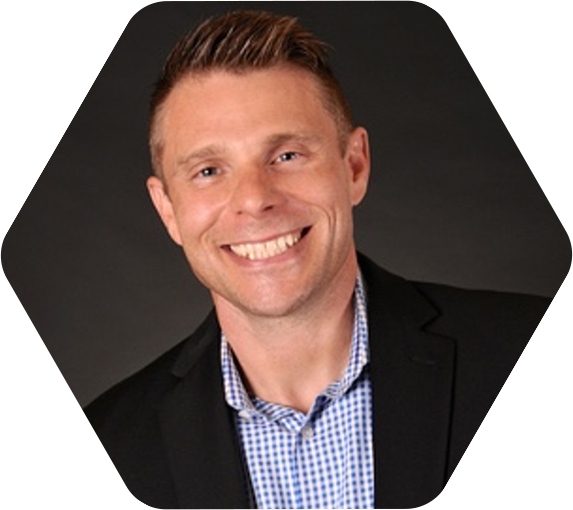
Scott Ripley is an employee benefits advisor with Arthur J. Gallagher. He specializes in working with organizations in the strategic design, implementation, communication and management of total rewards programs to help attract and retain talent. Scott’s practice focuses on helping companies improve employee engagement and organizational wellbeing. Scott is the past Chair of Professionals in Human Resources Association (PIHRA) South Orange County and has conducted several speaking engagements pertaining to healthcare cost-containment and company-sponsored wellbeing programs.


April 19, 2021 at 2:00pm
The Power of the Career Conversation: How to Retain, Engage and Motivate Today’s Workforce
Presented by: Serena Santillanes, MS, NCC, MCC, LPCC, Career and Professional Development Consultant, Career Journeys
Education Track: Leadership & Personal Growth

Today’s workforce has made it clear that work is not just “work” anymore! Employees are sprinting toward companies and more specifically toward leaders who grow and develop them. Career no longer means “the next raise” or “promotion.” Today’s employee wants something more and that something is called Career Development! This means a deeper dive into skill building and work that gets them excited as well as being able to fulfill their full potential. Leaders who can master the career conversation with their employees on a regular basis are the reigning winners of top teams, motivated employees, and winning results.

You might be thinking:

  • I don’t have time for career conversations with my employees.
  • I don’t know what to say or how to support them.
  • We don’t have promotions in my department right now, I cannot offer any career development.
  • Our organization doesn’t have career ladders or many options to choose from.

Don’t let these become barriers to getting, retaining, and motivating top talent. Lean on the simple and regular use of career conversations no matter how large or small your organization is or how many career opportunities you can offer. Serena Santillanes, Master Career Counselor and Consultant, has worked with organizations, employees, and leaders to help them leverage the career process in their organization. Over the years, Serena has taken proven career strategies used as a professional career counselor with thousands of clients and delivered practical tips, strategies and resources to help leaders be more confident and productive in their employee career conversations. In this session, she will share easy-to-use and ready-to-implement strategies to career coach employees all year long.

Learning Objectives:

  1. Learn how to support your employees’ ongoing career and professional growth
  2. Understand common employee career issues leaders face
  3. Gain simple strategies for having engaging career conversations all year long

Serena Santillanes is the President and Founder of Career Journeys. She is a Career and Professional Development Consultant, Trainer, Facilitator and Coach devoted to providing practical solutions that transform people, teams and organizations. She helps companies create thriving work environments. Serena specializes in building emotional intelligence, mastering communication using the MBTI, and supporting managers and employees in productive career conversations. She has created leadership and employee development programs as well as team sessions for organizations like Southern California Edison, Edison International, Hulu, Disney, and the State of California to name a few.


April 26, 2021 at 2:00pm
Shake Up Your Culture… One Shift at a Time
Presented by: Jeff Nischwitz, Snow Globe Shaker / President, The Nischwitz Group
Education Track: Culture

It’s time to shake up your culture, your team and your results with actionable tools to move from a culture by default to a culture by design. Everyone talks about wanting to create a culture, but the truth is that every organization already has a culture. The only question is whether it’s a culture by design or a culture by default. Too often, team members are looking up (to leadership) to define the organization’s values and culture, but every team member has the opportunity to design, develop, nurture and sustain the culture (or to kill it). At the same time, leaders are looking to their HR professionals to claim a seat at the leadership table and to be a part of the culture solution.

Jeff Nischwitz will empower you with unique perspectives on building a culture by design — a culture that will help grow your team, your organization and your outcomes. Jeff will also be sharing his innovative ideas on designing and nurturing culture where every team member is empowered for impact. Walk away with implementable tools for guiding and impacting the culture in your organization. Get ready to claim your seat at the leadership table to shake up your culture, your team and your impact!

Learning Objectives:

  1. Leadership shifts for engagement, impact and influence
  2. Enhanced impact awareness including tolerance impact
  3. Embracing and building an accountability and feedback culture
  4. Tools for putting the power back into empowerment
Known as a Facilitator of Truth, Snow Globe Shaker and the Leader of Shift, Jeff Nischwitz is a man on a mission – a mission to help people shift how they lead and thereby shift their leadership impact. As an international leadership, culture and team engagement speaker, Jeff Nischwitz is known for his unique perspectives, for challenging traditional thinking, and for delivering tangible shifts for leaders to grow their people, build their businesses and enhance their relationships. Jeff is the author of three books including his two most recent books: Unmask: Let Go of Who You’re “Supposed” to Be & Unleash Your True Leader (Motivational Press 2014) and Arrows of Truth: Simple Shifts for Personal Transformation (Eagle Heart Press 2017). Jeff works with a wide range of organizations on growing leaders, building engaged and empowered teams, accountability and achieving your whole other level of impact and influence.


May 3, 2021 at 2:00pm
The 7 Components of Business Financial Intelligence for today’s HR Leader
Presented by: Paul Butler, Client Partner, Newleaf Training and Development
Education Track: Strategic HR

Over the years, we have wrestled with how best to measure organizational performance. We’ve observed how some businesses are all about the profit-and-loss account. Others focus on a strong balance sheet. Then there are those that take great pride in winning awards. Many organizations appreciate the accolades they receive from their altruistic efforts to give back to communities and causes they believe in. Some focus more on internal metrics to monitor the minuscule aspect of every level of productivity, as if the enterprise were one big soulless machine.

There are seven components of business financial intelligence. They’re interdependent and can provide the most balanced, healthy, sustainable scorecard for measuring an organization’s success.

  • Customers
  • Cash flow
  • Profit
  • Productivity
  • Growth
  • Teams
  • Community

These seven components can provide a much more balanced scoreboard for measuring an organization’s success than just the bottom line of net profit. These seven components can sustain success over time. Four of them are primarily internal measurements (cash flow, profit, productivity, and growth), two are primarily external (customers and community), and ultimately, it’s teams of people who make this all happen.

This address will provide a framework for HR leaders to look more holistically at their organization and consider how they can monitor and reward performance in ways they’ve perhaps never imagined before. In turn, HR leaders are able to make a more strategic contribution to their organization as they utilize human resources to produce business results.

Learning Objectives:

  1. Relate the 7 components to your own organization
  2. Better understand the money-making model of your own organization
  3. Have clarity on how the work of HR can drive all 7 components of business performance
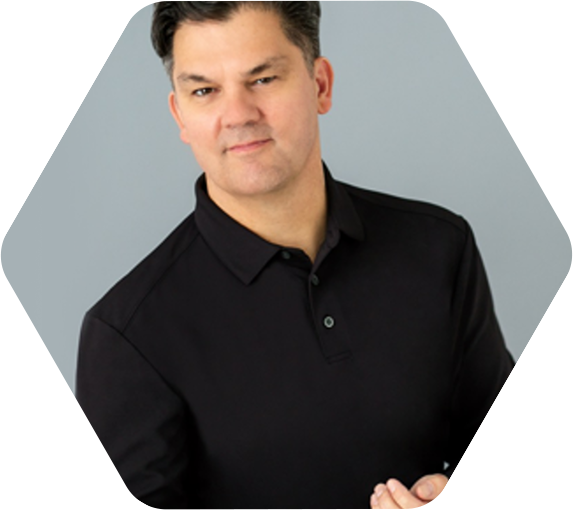
Paul Butler is a chartered global management accountant (CGMA) and a chartered management accountant (CIMA). Originally from England, he worked for Hilton International Hotels and Marriott International as a regional finance director and first came to the United States as the director of marketing and financial services for Hilton Honors, when Hilton’s worldwide headquarters was in Beverly Hills, California. In 2006, Paul started Newleaf Training and Development—a staff-training and leadership-development company that serves clients across the United States and around the world. A teacher at heart, Paul also serves as a faculty member within the business department of the Master’s University in Santa Clarita, California.


May 10, 2021 at 2:00pm
(UN) Comfortable: Building Belonging
Presented by: Tracy Jackson, President & CEO, HR E-Z, Inc.
Education Track: Inclusion & Diversity

It’s time to get (un) comfortable by having necessary conversations to address topics taking place in the world around us, centered around inclusion, bias, equity and diversity. This dynamic session will give you participants a safe space to begin exploring behaviors, language and subconscious thoughts to help identify successful methods of interacting and engaging with diverse populations in new ways. This journey is designed to ensure that there is a seat for all who deserve an opportunity to sit at the table and to create a sense of belonging for all. Modern day examples and case studies will be presented, many from my own experience as a woman of color, an executive, and the daughter of a career law enforcement officer.

We will discuss how diversity can impact profitability in an organization and how important it is to step back and look at the big picture to identify the blind spots and weaknesses of an organization, as it relates to DEI.

Participants will be able to identify some damaging language and practices in their workplace that may need to be revisited with a new lens. They will be given tools on how to start the conversation to create healthy dialogue. They will also walk away with a better understanding of how they can engage in the solution to create a sense of belonging for everyone they encounter, whether in social settings or in the workplace.

Learning Objectives:

  1. Understanding how implicit bias affect decisions, subconsciously. Providing insight on how to challenge the status quo to achieve sustainable change, to improve retention and attract top tier talent.
  2. Microaggressions: discuss what they are, provide examples, and how to respond to them
  3. Increase comfort in speaking about issues that relate to diversity and inclusion: Discuss many of the recent high-profile social issues from George Floyd, LGBTQIA, Black Lives Matter movement, gender, disability, etc.
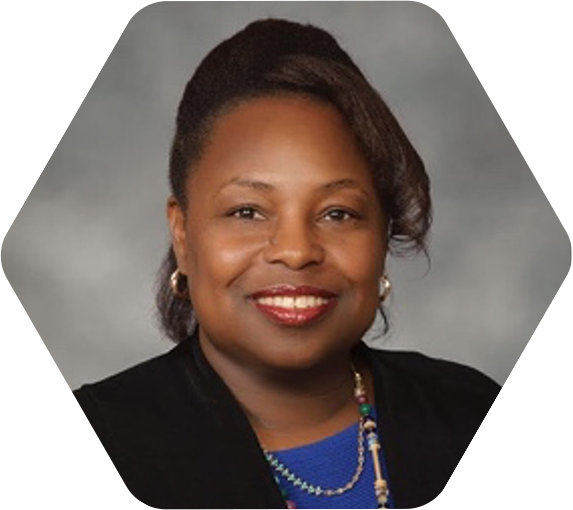
Tracy Jackson is a talented and seasoned executive business leader, and CEO of HR consulting firm HR E-Z, Inc. With over 20 years of business experience, and 15 years as an executive she was the VP of HR for Sleep Train and Golden 1 Credit Union and the Chief HR Officer for SAFE Credit Union before starting her own company to focus on the areas of HR that she’s passionate about.

Tracy’s philosophy is simple. HR should be a resource for employees, so that they can give their best each day at work. She has especially found a calling for dealing with issues as they relate to diversity, inclusion, and implicit bias especially as it relates to recruiting, retaining and culture. Her goal is to create engaged workforces where all employees are able to thrive and to elevate the organization, by having difficult conversations in safe spaces. Tracy is highlighted in an Amazon best-selling book called “Balanced Accountability” by Hernani Alves, and has showcased in magazine articles.


May 17, 2021 at 2:00pm
Remote Strong: Creating and Managing an Effective Remote Workforce
Presented by: Sara Skowronski, Principal Consultant, Eos Human Resources Consulting LLC and Laura Renner, CEO, Freedom Makers
Education Track: People & Talent Management

We were unexpectedly and swiftly plunged into remote work in 2020. At first remote work seemed to have a lot of potential and many companies declared they were never going back to the office. Then fatigue set in and sentiment began to swing towards getting back to the office. In this presentation, we share how to set up a remote team for success. You will leave with concrete strategies and tactics to implement for maintaining a effective and productive remote team.

Learning Objectives:

  1. Myths of remote work debunked
  2. Why you should embrace remote work even after COVID
  3. How to build a successful remote workforce

Sara Skowronski is a Senior Human Resources professional with over 18 years progressive experience in assisting in the rapid growth of several Bay Area businesses. She is the Principal Consultant at Eos Human Resources, where she and her team consult start-up and small employers who are not yet ready for a full-time Human Resources staff but are in need of access to the knowledge required to be an employer. Eos HR’s clients come from a variety of industries including finance, design, engineering, food service, and more. Prior to founding Eos HR, Sara worked alongside small business owners in operations, strategy, finance, marketing and IT. She has worked in industries ranging from telecom to banking, to staffing and hospitality management. She is certified as a Senior Professional of Human Resources (SPHR) and holds her Life and Health Insurance Producers License.

A veteran of the U.S. Air Force, Laura Renner founded Freedom Makers out of a passion to help small business owners and military families. She graduated from the U.S. Air Force Academy with a Bachelor’s of Science in English and a minor in Chinese-Mandarin. She served as a Public Affairs Officer before leaving the Air Force to earn an International MBA from the University of Chicago Booth School of Business. Laura has started three businesses, improving her operations and systems each time. When she’s not working to grow Freedom Makers, she very much enjoys traveling, snowboarding, and having story-worthy adventures!

*THE ROAD TO CAHR21 Webinar Series is FREE to those registered for CAHR21, and is a nominal fee ($25 per webinar) for those who aren’t attending the conference.

Visit THE ROAD TO CAHR21 to register for the Webinar Series.