
Keynote Speaker Archives - CAHR26
Betting On You: How HR Can Fix Work Once and For All

Betting On You: How HR Can Fix Work Once and For All

One of the biggest benefits of the Virtual 2021 California HR Conference is the talented array of presenters. And one of the most inspiring is Laurie Ruettimann, who will be leading us through a deeper understanding of our own employee experience.

There’s never been a more significant opportunity for HR professionals to tackle complex issues and fix work once and for all. But far too many human resources practitioners are leading complex change initiatives and talent attraction strategies while feeling disconnected from work, disengaged from the company’s strategic goals, and overwhelmingly burned out.

You can’t fix work for others if your own employee experience suffers. In this session with Laurie Ruettimann, you’ll deepen your understanding of the true definition of employee experience by using your personal career as a case study. You’ll also explore strategies to provide engaging, personalized experiences that enable workers in all departments to be their best at every stage of the employee lifecycle.

For years, HR has been promising to create cultures of curiosity and learning that attract and retain the best and brightest workforce. Laurie believes that human resources can deliver meaningful experiences for employees, but it has to start with itself. With a carefully designed plan that focuses on bringing innovative human-centered policies and programs to life, you’ll be on your way to rethinking the future of work and moving the HR industry forward.

  1. Identify, analyze and contract the emerging trends in leadership and HR – related to the central principles of wellbeing, continuous learning, risk management, AI, customer service (CX) and the employee experience (EX) – and assess whether these trends and technological solutions are a good fit for your organization.
  2. Define and distinguish between the most common leadership styles (authoritative, task-oriented, coach, servant, hands-off, self-leadership).
  3. Plan a personal communication methodology to become more effective at advocating for and leading the organization’s people-agenda in a face-to-face, hybrid, or remote work environment.
  4. Have a working proficiency with a risk-management tool called the premortem, which evaluates uncertainty and creates a framework for HR and leadership programs, policies, and procedures in a post-COVID environment.

Betting on You, Wednesday May 26, 2021, 12-1pm


Hire Them Back: Get Women Back to Work ASAP

Did you know that 2.5 million women in America have left the workforce since the beginning of the pandemic? Perhaps one of your friends or family members left work due to the coronavirus. Maybe it’s you.

This past February, Vice President Kamala Harris warned that the rapid departure set women back for decades. Speaking to women’s groups and activists in February, Ms. Harris said, “In one year, the pandemic has put decades of the progress we have collectively made for women workers at risk.”

She called it a national emergency, and she’s correct. But it’s not like the workplace was terrific for women before COVID-19. Research from multiple academic institutions and think tanks shows us that women in the U.S. have always worked more, earned less, and had fewer savings to show for their labor than men. So when the virus eventually landed in Seattle and New York City in March 2020 and spread throughout the country, it confirmed what most of us knew: the promise of greater gender equality and inclusion in the workforce was nothing more than PR for America’s leading corporations. For employers who want to do the right thing in the face of this great moral crisis, the answer is simple: Hire women back.

Yes, Hire Women Back

Yes, reinstate women back on the payroll immediately. Don’t make them reinterview. Simply restore their health insurance and retirement benefits and contributions. Bridge their service to make sure there’s no gap on their resume. Get them back on their teams with colleagues and leaders who care about them.

Why should leaders and HR departments rehire women who left the workforce to care for their children and other immunocompromised family members? You owe it to them. During the scary spring and summer months of 2020, men shifted into remote work roles and thrived. But productivity and output only improved because of the women behind the scenes who either juggled work and domestic responsibilities or opted out of the workforce like it’s 1962.

While it’s tough for corporate leaders to wrap their minds around hiring women back, you should do it for selfish reasons. Attracting talented workers who can hit the ground running is already expensive. According to Glassdoor, the average U.S. company spent over $4,000 to hire a new employee in 2019. As the global economy opens up, this number is predicted to increase exponentially. You can pay to rehire women now, or you can pay to reskill and upskill your recycled workforce in the future. Either way, this crisis requires action. The most cost-effective path forward is to hire these women back.

Yes, There Are Obstacles

Of course, there are obstacles to just hiring women back. The problems that drove working women out of the workforce haven’t disappeared. School schedules are chaotic, caregiving demands never end, and women are still responsible for almost all household chores. According to both the World Economic Forum and the United Nations, women spend a full working day a week more than the average man doing unpaid childcare.

How do you help working women avoid the pitfalls that forced them to leave in the first place? Hire them back quickly and lean into those wellbeing programs your HR department has been talking about for years. Your corporate culture failed to protect those talented workers who needed that elusive work-life balance promised on your company’s website. You were unable to make good on your end of the bargain in 2020. Let’s rectify that mistake in 2021. It’s not just the right thing to do for working women. It’s the right thing to do for your company’s culture and morale.

Can corporations honestly be expected to hire back workers who are distracted with household duties? Absolutely. Treat these returning women like the lowest-performing member at your organization: let it slide for a while. Standards of performance are subjective even when we pretend like performance metrics are objective. When I worked in corporate human resources at some of America’s most profitable organizations, we rarely fired people for performance. Sometimes it took an act of divine intervention to place someone on a corrective action plan. And once those plans were initiated, it’s not like the organization could move quickly to fire someone and hire a talented rockstar in his place. It often took HR up to six months to terminate someone’s employment for poor performance. If you have a terrific human resources department, stage an intervention and make sure they give working women the tools and resources she needs to be successful just like you promise to other struggling workers. Tolerate the expected dip in performance as she reacclimates to her old role. Better yet, ask your HR team to step up and create systems of work and benefits programs to enable working parents of any gender to be successful within your corporate culture.

Now, there is a legitimate process-driven question about what to do with returning women whose jobs have been backfilled, eliminated, or absorbed in other ways. If the work no longer exists as it did in 2020, can we hire them back? Hell yes. Hire them back with an apology for capitalizing on the pandemic and not creating a corporate safety net to ride out the pandemic. Expect very little pushback from colleagues and supervisors. People are notoriously overworked, and I can’t imagine a scenario where an employee or manager gets mad for being awarded an additional headcount.

Does it seem absurd to ask a woman to return to work in her old job and pick up where she left off? Maybe. Hire her back anyway and ask her to work with your human resources team on a task force to address working parents’ issues in your company. Pay her (and every other member of an employee resource group) to explore serious organizational issues while earning a salary. This specific solution allows a rehired worker to network internally and discover a new internal role where it’s possible to contribute to the company’s overall success.

Yes, This Is Your Company’s Responsibility

Some might argue that we shouldn’t expect corporations to do the government’s job. They say that hiring women back en masse is merely a bandaid, and it’s not a company’s job to address society’s lack of empathy. But corporations have been leaders on social issues for decades.

During the summer of 2019, right before the pandemic, nearly two hundred of America’s top CEOs came together to change the future of work. The Business Roundtable declared that corporations had a new mission: deliver value to customers, invest in employees, deal fairly and ethically with suppliers, and support the communities where their enterprise operates. If the purpose of a corporation has changed — and companies need to be good stewards of people, communities, and the planet — you can’t fulfill that promise if nearly 1.5 million mothers are still missing from the workforce.

Unfortunately, executive leaders like to say one thing to the public and behave another way in private. Billionaires around the world added $4 trillion to their wealth during the pandemic. According to Oxfam, billionaires have more wealth than the 4.6 billion people who make up 60 percent of the planet’s population. COVID continues to drive those numbers in favor of the ultra-wealthy. Meanwhile, only four cents in every dollar of tax revenue comes from taxes on the wealthiest among us.

If companies don’t accept responsibility for their role in creating a national employment gap, politicians will notice. It seems easier to proactively tackle this issue on your terms than being hauled before Congress. As Mark Zuckerberg can testify, hearings aren’t cool.

Yes, We Need To Hire Women Back ASAP

As a longtime human resources leader and executive coach, I believe there’s only one way to fix the employment gap and help working women: hire them back. Think it can’t be done? Accenture took the lead and is committed to hiring moms back ASAP.

If a company like Accenture can partner with local non-profits and take the plunge, what’s your excuse? Hire these women back. Do this tomorrow, without delay, and with an apology to all working women and families for your role in this national crisis. Hiring women back to work isn’t just the moral and ethical thing to do. It’s the most economically feasible way to bring seasoned workers back quickly and address the forthcoming talent shortage.

But my advice is to move quickly and hire women back before they take one look at the post-COVID job market, remember what it was like to be cast aside for the common interests of men, and decide to never come back at all.


Laurie Ruettimann’s career began in 1995 as an HR assistant for Leaf Candy Company, providing operations assistance and recruiting services for an hourly workforce in a manufacturing environment that was heavily unionized and staffed with immigrants from war-torn Bosnia. Since those glorious days, She’s worked at Monsanto, Alberto-Culver (now Unilever), Kemper Insurance (out of business), and Pfizer (not her best work). Even as her title and compensation grew, she hated her job.

Laurie became a writer, speaker, and podcaster as a result of the heartbreak and outrage she experienced throughout her corporate career. While she loves calling out boorish behavior, she is dedicated to the revolutionary and long-overdue mission of fixing work by telling stories and teaching leaders how to create workplace cultures that support, empower, and engage workers meaningfully.

Now Laurie helps executives and HR leaders prioritize the employee experience to avoid the collateral damage of a toxic work environment. You can find her all over the internet, shaking her fist and yelling at clouds.

Laurie’s new book Betting on You: How to Put Yourself First and (Finally) Take Control of Your Career is now available! Order a copy
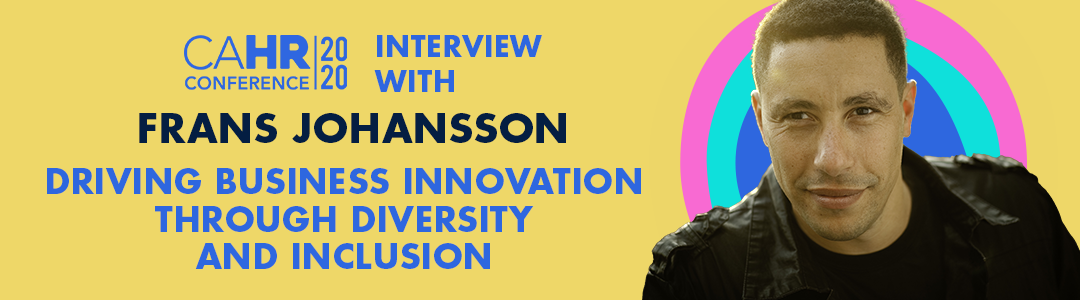

Diversity and Inclusion Insights with Frans Johansson, CAHR20 Keynote

Diversity and Inclusion Insights with Frans Johansson, CAHR20 Keynote

Diversity and Inclusion can drive performance and innovation at the team level.

16 years ago, when Frans Johansson wrote his book, “The Medici Effect,” this statement about diversity and inclusion was not as commonplace as it is today in both HR and Board Member meetings.

Today the importance of diversity and inclusion initiatives at all organizational levels is clear, but the path to optimizing those against performance, business objectives, and innovation may not be as evident to everyone.

This is why PIHRA CEO, Rafael Rivera, invited Frans Johansson to the 2020 California HR Conference to keynote the General Session on Wednesday, October 28th.

Frans is known for his animated, engaging presentations, and for delivering actionable, relatable insights and guidance to his audiences.

Of course, we could just ask you to believe us and register for CAHR20 based on our word about Frans’s presentation, or you can watch Rafael’s interview with Frans below. It offers a preview of Frans’s energy and valuable insight you can take back to your organization.

Perhaps the most important question his presentation answers for HR and Business leaders is, “What does it mean to have an inclusive team and how can I see that expressed in the business outcomes I am responsible for?”

If the answer to this question is on your mind, watch the interview below, then register for your CAHR20 Ticket before the event kicks off next week!

Why See Frans speak about diversity and inclusion at CAHR20?

Frans Johansson has made it his life’s mission to prepare leaders and organizations around the world for this future. His high-energy, fast-paced keynotes have become legendary for how quickly they can drive leaders to action—and have made Johansson one of the most compelling speakers in the world.

He is the author of The Medici Effect: What Elephants and Epidemics Can Teach Us About Innovation, and The Click Moment: Seizing Opportunity in an Unpredictable World. Frans is the Co-Founder and CEO of The Medici Group, a firm that advises executive leadership from some of the world’s most influential organizations. His firm recently launched the world’s first team coaching platform, which leverages diversity and inclusion to drive business outcomes.

Raised in Sweden by his African-American/Cherokee mother and Swedish father, Johansson has lived all his life at the intersection. He holds a Bachelor of Science degree in Environmental Science from Brown University and a Master of Business Administration degree from Harvard Business School.

Here’s Frans in his interview with Rafael. 

Gain even more actionable insights on how diversity and inclusion drives innovation from Frans Johansson LIVE at the Virtual 2020 California HR Conference.

Your time and budget are especially precious these days. That’s why we designed the Virtual CAHR20, happening October 27-29: a compact, 3-day live event featuring the top minds from a variety of industries, providing you with a whopping 30+ HR recertification credits. 


Register for CAHR20 today!

Advance your organization.
Accelerate your professional growth.
Attend CAHR20!

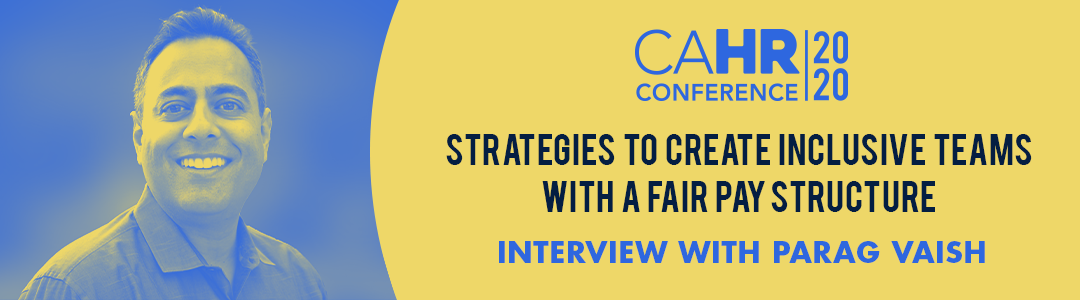
Strategies to Create Inclusive Teams with a Fair Pay Structure

Strategies to Create Inclusive Teams with a Fair Pay Structure

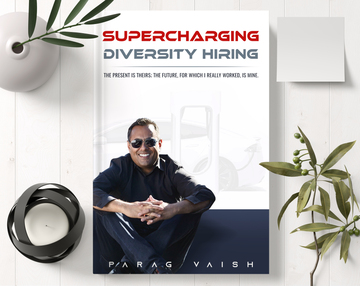
Addressing Pay Equity From The Ground Up with Parag Vaish

Did you know the first recorded awareness of pay inequity in the U.S. dates back to February 1869? Women federal employees received 50% of men’s salaries for the same work. Since then, decades of increased awareness, strikes, and legislation like California’s recent Ban The Box bill have brought real change. Over time, we’ve worked to create new structures to make corporate compensation more objective and unbiased, and provided more opportunities for employees based on their skills rather than gender, ethnicity, sexual orientation, or religion.

That specific discrepancy in the federal government was remedied in 1870, but it wasn’t until 1963 when President John F. Kennedy signed the Equal Pay Law into effect. Nearly 60 years later, women make 79% of what men make for the same work.

Pay equity should matter to everyone – and there’s a chance you have more to learn about it. (We sure did – see our first question below.) For employers looking to reduce turnover, compensation is a major factor in employee engagement and talent retention. How do you ensure your employees feel valued? Expressing appreciation in your company’s culture is meaningful, but how you develop and communicate your organization’s pay process can enhance employee satisfaction.

There’s still a long road ahead to reaching true equity in talent management and compensation. However, if you’re anything like Parag Vaish, you’ll know the best time to make a more equitable workplace is now! Not only is it wildly overdue, it is also wildly possible.

We’re so excited for Parag’s CAHR20 session because he has demonstrated what a leader in this space can achieve. In his career at Tesla, athenahealth, and Google, Parag has achieved monumental results in his efforts to reduce bias in hiring and compensation practices, increasing representation from underrepresented populations in the technology sector, and closing the wage gap entirely on his team at Tesla.

To learn more about Parag and why he’s excited to present at the 2020 California HR Conference, we asked him a few questions below.

Read on and be sure to sign up for your CAHR20 Early Bird Ticket before prices increase October 16!

Why See Parag at CAHR20?

Parag Vaish is Founder-in-Residence at Google’s Area 120 incubator. Parag is an innovative leader in the field of digital product management and design. He has an extensive track record of success in both product and business roles. Parag has helped industry giants like the Walt Disney Company, Microsoft, NBC News, StubHub!, athenahealth, and Tesla as well as innovative startups like Escapia (acquired by HomeAway) exceed their annual goals. Parag’s unique mixture of team leadership skills, emphasis on quantitative analysis and his overall vision make him an industry leader in his field. Parag is currently a Founder-in-Residence at Google in the Area 120 group after transitioning from his position as Head of Digital Product Management, Content & Design at Tesla. You can read more about Parag’s distinctive Team Decision Matrix model, developed while at StubHub! and refined at other companies, in his recently released book, “How to Rank and Prioritize Nearly Anything” which is now available on Amazon. Parag Vaish earned a Bachelor of Science, Business Administration, at California State University, and an MBA and M.S. in Information Systems at Boston University. Parag’s passions include speaking about product management, accelerating the growth of early-stage companies, market validation of new product introductions, gender diversity and inclusion, people development, data-driven decision making and maximizing resource efficiency.

Without further ado, here is our interview with CAHR20 Presenter Parag Vaish!

CAHR20: Fair Pay has been a widely discussed topic for quite a few years now, so why are organizations still struggling to properly implement it?

Parag Vaish: Equitable Pay is a phrase I prefer over Fair Pay. I believe organizations are struggling with this because the entry point for a candidate, into a company, is typically based on your compensation trajectory or your last wage rate (rather than the pay range for the job being offered).

I’m sure you’ve all heard the question in interviews…”What are you expecting in terms of compensation?” Inherently, this question is seeking the compensation numbers from the candidate rather than the pay range of the role in question.

Until companies define the role attributes, and then the level and associated compensation for the level, we’ll continue to have a male and female employee being paid differently for the same job. Keep in mind, I am not a compensation or HR professional, so this is just my operating manager viewpoint. 

Aithan Shapira, CAHR20 Keynote Speaker

CAHR20: What sparked your commitment to driving change around equitable pay and diverse teams?

PV: I’ve actually written a book on this exact question. It can be found here. The short version is that I’ve grown up trying to fit into a world where I often felt different than others, I went to schools where I felt disadvantaged relative to brand name schools and I like to consider myself one who is willing and able to challenge the status quo. This makes for the perfect cocktail of attributes to take on the topic whenever I am in a position of influence. 

CAHR20: What are the biggest challenges you’ve seen leaders in HR face when trying to implement more equitable compensation programs?

PV: Managers are often unwilling to partner closely with their HR business partner, recruiting team and compensation team to create holistic change. Often, managers are functional experts such as Engineering Lead, Design Lead, Finance Lead, etc where what they know best is their domain and they defer topics of diversity and pay equity to those who are in the HR roles. It starts with hiring managers having an interest in solving the problem. Now let’s suppose you have the interest and support from HR. The next challenge is going to be ensuring that you are setting a framework in place to allow for diversity to be woven into your hiring decisions in a natural way versus something which appears forced. If you are doing unnatural acts to shoehorn diversity into your organization, it may not go well. If you have the luxury of looking ahead towards growing your team by more than three people (remember, my experience at Tesla was taking a team from 8 to 43 people), then you can start to visualize what attributes, skills and team composition that you’d like like the collective team to have once they are fully hired. There are probably 8-10 more challenges one might face,but I’ll cover those in the Q&A session. 

CAHR20: Without giving away too much, why should CAHR20 attendees see your presentation?

PV: My story is somewhat unique in that the gender pay equity and diversity results on my team at Tesla were not as a result of a company mandate nor was it HR driven. It was initiated by me. Many speakers on this topic are coming from the HR perspective whereas my trade is Product Management and Design. So, for any HR professionals, functional department heads, CEO’s, etc who want to hear how a lone divisional leader addressed equity and diversity, without it being prescribed to them, this session will offer a detailed account of what I did, what I was surprised to learn and what I would do differently next time.


Thank you for your time, Parag!

Gain even more actionable insights from Parag Vaish LIVE at the Virtual 2020 California HR Conference.

Your time and budget are especially precious these days. That’s why we designed the Virtual CAHR20, happening October 27-29: a compact, 3-day live event featuring the top minds from a variety of industries, providing you with a whopping 30+ HR recertification credits. 

Plus, CAHR20 attendees get early access to complimentary weekly HR content & credits with our PIHRA Road to CAHR20 Webinar Series every Monday at 2:15pm!

Until October 16, 2020, you can take advantage of the CAHR20 Early Bird Rate to secure excellent HR professional development – including Road to CAHR20 Bonus Sessions – at a reasonable cost.


Register for CAHR20 today!

Advance your organization.
Accelerate your professional growth.
Attend CAHR20!

Unleash Creative Transformation in HR

Unleash Creative Transformation in HR

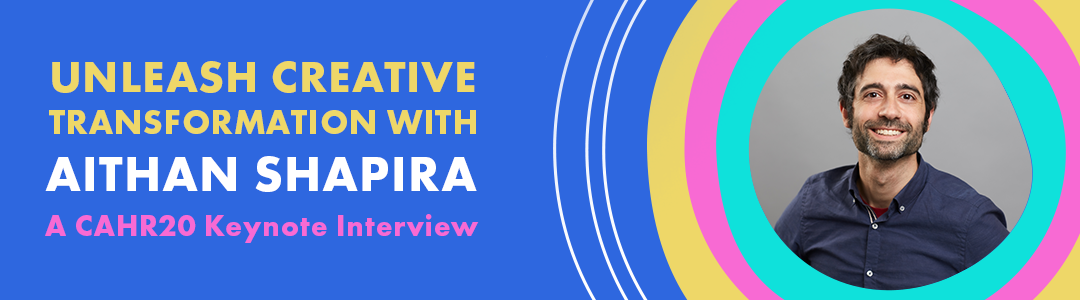
An Interview with Aithan Shapira

What’s stopping your employees from unleashing their full creative power at work? California HR Conference Keynote speaker Aithan Shapira, MFA, PhD has a few ideas.

We often hear words like “agile,” “innovation,” and “transform” used as shorthand or inspiration for improving workplace productivity and culture, but Aithan has arrived to share precisely how creativity can unlock the benefits of these buzzwords, and how HR can lead the way.

At CAHR20, we source expertise from many different backgrounds to bring you fresh, actionable insights to make work better for everyone. A polymath like Aithan Shapira (an MIT lecturer, renowned artist *and* business-launcher) is the perfect person to demonstrate how successfully fostering creativity can impact your company’s bottom line.

To learn more about what Aithan’s bringing to his Keynote session at the Virtual 2020 California HR Conference, we asked him a few questions about tapping into our creative power these days.

Why See Aithan at CAHR20?

If there’s anyone we’ve met with an equally strong command of both the left and right brain, it’s Aithan.

Aithan Shapira, MFA, PhD, is an established artist, Lecturer at MIT Sloan, and founder of Tilt, a culture design and transformation firm focused on change-ability.

As facilitator and coach, he draws on 20+ years of transforming creative process into cultural practice that he is applying with global leaders in organizations such as NASA, Google, and Roche.

Aithan serves on McKinsey’s think tank for Advancing Adult Learning and Development and has pioneered progressive curricula at the edge of leadership and skills retraining for the future of work at MIT Sloan, Harvard iLab, Stanford d.school, and the Berklee Institute for Creative Entrepreneurship.

Aithan developed his research on the creative process at the Royal College of Art & Design, lived in an Australian Aboriginal community for three years to study art’s impact on cultures of survival, and continues to be a visiting critic at arts institutions internationally. He exhibits his artwork in museums and galleries in New York, London, and Miami. 

Aithan’s skilled passion for art, research, and immersion will become tangible for CAHR20 attendees at his unforgettable Keynote presentation – we’re excited for you to experience it!

Until then, here’s Aithan’s insight on all things creativity for HR professionals.

CAHR20: Why is embracing creativity so critical during times of uncertainty?

Aithan Shapira: I never understood goalies. When an object is hurtling toward me at 60mph my human instinct is to duck, not to throw my body in front of it. High-performing goalies are continually training at transmuting that fear into purpose-driven action at this moment of opportunity.

Similarly, uncertainty creates profound anxiety for many of us. It is creativity that allows us to harness the opportunity of the unknown. For a creative leader, much like an artist, a blank slate is a high-potential moment – fertile for innovation, change, growth, and equally fertile for contracting and recoiling into the familiar and safe.

Creativity is knowing how to be when you don’t know what to do.

Aithan Shapira, CAHR20 Keynote Speaker

"It is creativity that allows us to harness the opportunity of the unknown."

-Aithan Shapira

Aithan Shapira, CAHR20 Keynote Speaker

CAHR20: HR professionals tend to focus on resolving conflict… How can they encourage creative conflict within and beyond their department?

AS: Difference drives creativity. Our unease with conflict, and often premature resolution, limits our ability to leverage the perspectives that diversity provides for innovation and growth. There is an art to curating organizational (and individual) cultural practices that contain a healthy dose of differentiation. Increasing capacity to work with the discomfort of holding competing points of view simultaneously and the practice of listening by dropping personal perspective in order to fully engage with another are bridge skills that enable high-performing cultures to reap the benefits of creative tension. 

Rather than avoiding or resolving tension too quickly, build a culture of candor and feedback loops that will actually enable the psychological safety necessary to operationalize diversity – of people, perspectives, processes, and skills.

CAHR20: Where would someone start if they want to position themselves as a leader that not only embraces, but builds progress during uncertain times?

AS: Uncertainty is what separates leadership from management. It is during uncertain times that our leadership stands out, whether we like what it looks like or not. We are constantly looking outside of ourselves for answers – asking experts, watching TED talks, consulting Google, reading blogs. We’ve forgotten how to look internally for our answers. The only thing you control is how to be – that’s where certainty lies. Understanding yourself and how you relate to those things outside of you – that’s how you begin thrive in a constantly changing world. 

At any time, and especially in uncertainty, a leader builds progress by measuring the success of a day by how closely she lives to her values.

CAHR20: Without revealing too much, what takeaways can our attendees expect from your keynote?

AS: Attendees can expect an experiential immersion, despite being virtual, on change-ability. We will engage in an avant-garde approach using the arts for transforming leadership, training to change in evolving contexts, and defining culture that changes together in more creative, agile, and adaptive ways.


Wow. Sounds cool! Thank you for your time, Aithan!

Gain even more actionable insights from Aithan Shapira LIVE at the Virtual 2020 California HR Conference.

Your time and budget are especially precious these days. That’s why we designed the Virtual CAHR20, happening October 27-29: a compact, 3-day live event featuring the top minds from a variety of industries, providing you with a whopping 30+ HR recertification credits. 

Plus, CAHR20 attendees get early access to complimentary weekly HR content & credits with our PIHRA Road to CAHR20 Webinar Series every Monday at 2:15pm!

Until October 16, 2020, you can take advantage of the CAHR20 Early Bird Rate to secure excellent HR professional development – including Road to CAHR20 Bonus Sessions – at a reasonable cost.


Register for CAHR20 today!

Advance your organization.
Accelerate your professional growth.
Attend CAHR20!

Staying Motivated In Human Resources

Staying Motivated In Human Resources

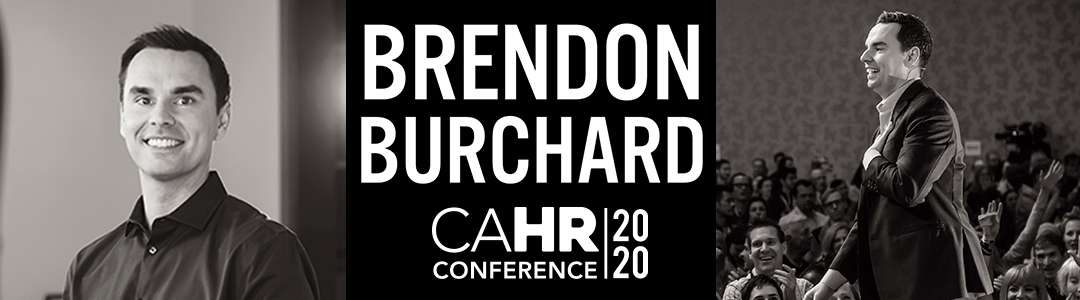
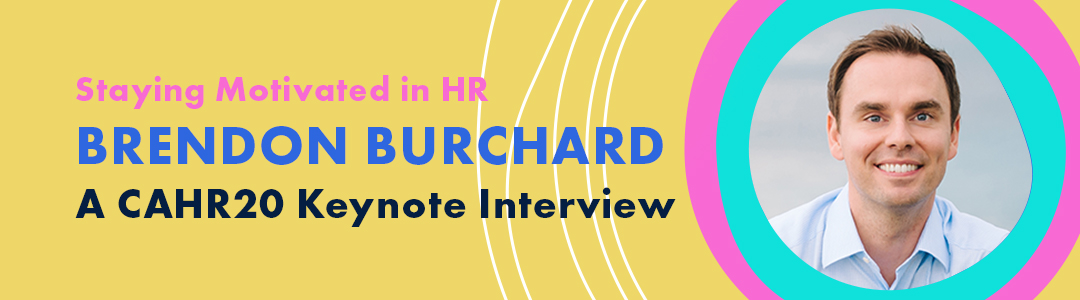
A Quick Interview with Brendon Burchard

How are you these days? No, really… how are you?

If you’re reading this, you most likely work in Human Resources or are responsible for HR in your business. There’s also a good chance you’ve struggled with feeling motivated about your job at some point in the last 7 months.

You aren’t alone. We at PIHRA have written about stress in HR because it’s a real issue.

Staying motivated in HR and not adding to the stressed out statistics is tough on a normal day, let alone during a pandemic.

This is why we invited Brendon Burchard to keynote the Virtual 2020 California HR Conference and asked him some questions about keeping our heads and energy high these days.

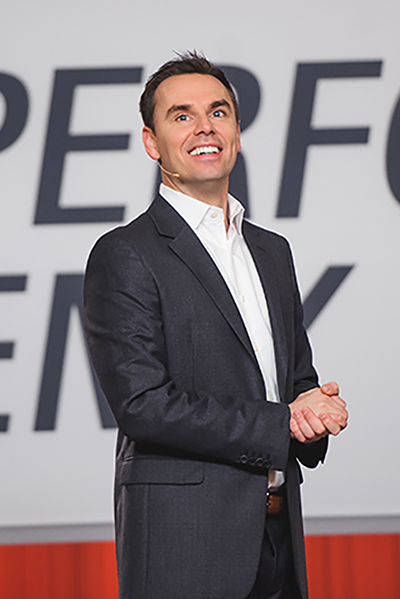
Brendon Burchard Staying Motivated in HR Interview for CAHR20

If you’re not familiar with Brendon, he’s a motivational phenom. In short, OPRAH goes to him for counsel on staying motivated. 

According to Forbes and Success magazines, Brendon Burchard is the world’s leading high performance coach and one of the most watched, quoted, and followed personal development trainers in history. 

He’s a #1 New York Times best-selling author, with blockbuster books include High Performance HabitsThe Motivation ManifestoThe Charge, and Life’s Golden Ticket. His bio is long and impressive, and you can read it here on the CAHR20 Speakers page.

Brendan Buchard on Staying Motivated in HR CAHR20

Why See Brendon at CAHR20?

Brendon has coached and presented in front of thousands in person, and his social channels boast millions of followers because we all need help sustaining motivation and keeping our focus at times.

With layoffs, furloughs, budget cuts, new work from home protocol, and a generally stressed out workforce trying to function under nearly ubiquitous uncertainty about the future, Brendon is the perfect person to help HR professionals re-energize their motivation and focus on what matters the most, on an individual and organizational scale.

 The world needs HR right now to faithfully steer us toward the workforce of the future, past the COVID-19 obstacles and challenges we haven’t even identified yet. (No pressure or anything.) This will take grit and resilience, which happen to be some of Brendon’s more frequent topics of conversation. 

He’s also one of those speakers whose positivity and energy is absolutely contagious, which means his CAHR20 keynote presentation will be engaging and interesting, unlike so many of the Zoom calls that leave us feeling drained.

Here’s Brendon’s advice on staying motivated these days and helping others as HR professionals. 

CAHR20: What has been your most reliable source of motivation during the pandemic that you’d recommend to other people?

Brendon Burchard: The only reliable source of motivation is within. It’s about aiming your attention, managing your energy and raising your sense of necessity to show up and serve every day. You do this by practicing deliberate habits like writing about your goals and purposes each morning, caring for your health and well-being, talking about your mission with others. You lose motivation the less you pay attention to what really matters. If you distance yourself from your goals, and you don’t feel in control of your habits and feel the strength and momentum that comes from that, then you’d best hand your motivation over to the odds of listening to some good podcasts once in a while.

Brendon Buchard Interview on Motivation for CAHR20

CAHR20: How should someone approach setting new habits during these very stressful times? 

BB: I’d start by reminding yourself that setting new habits is never easy; and no extended time in your life has been free from stress. In other words, you’ll have to do the same work as usual to set new habits: Seek clarity so you know what you want; fix your new desired actions to existing actions; practice the habit daily, no matter how long; enlist others to do the habit with you; and reward yourself not by partying but by reflecting, internalizing the win, and setting the next level of goal.

CAHR20: How can members of the HR community help others stay motivated these days?

BB: Increase your number of encouraging touchpoints with your people. That doesn’t just mean send them resources that are relevant for this moment. It means asking your people how you are feeling really. Is there anything you need? If we were all going to make it through this, stronger, what should we do now? Most of all: make it a we’re-in-this-together culture.


Thank you for your time, Brendon!

Gain even more actionable insights from Brendon Burchard LIVE at the Virtual 2020 California HR Conference.

Your time and budget are especially precious these days. That’s why we designed the Virtual CAHR20, happening October 27-29: a compact, 3-day live event featuring the top minds from a variety of industries, providing you with a whopping 30+ HR recertification credits. Plus, CAHR20 attendees get early access to complimentary weekly HR content with our PIHRA Road to CAHR20 Webinar Series every Monday at 2:15pm!

Until August 31, 2020, you can register for $0 today, and pay what you think the experience was worth AFTER the conference. Yes – you read that correctly! Our Flex Rate provides you with the flexibility you need to secure excellent HR professional development at a reasonable cost.


Register for CAHR20 risk-free today!

Advance your organization.
Accelerate your professional growth.
Attend CAHR20!